

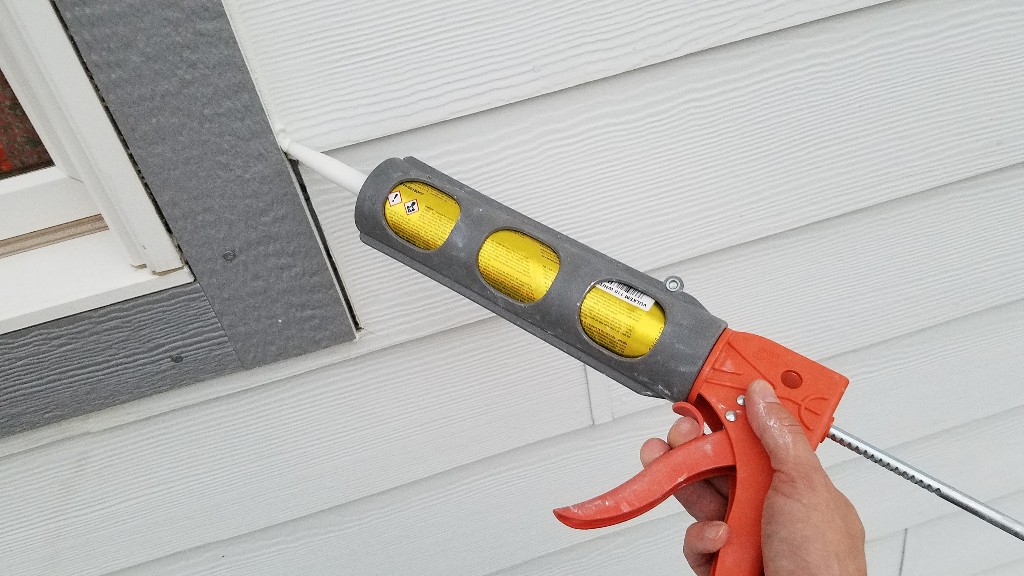
Most homeowners never think about the caulk around their siding until something goes wrong. That’s understandable. It’s not exactly the most exciting part of home maintenance. But right now, before the ground freezes for good, is one of the last good windows to catch small gaps before they turn into bigger problems.
Why Small Gaps Matter More Than They Look
Every house has spots where siding meets something else: a vent, a pipe, a window frame, a piece of trim. Those transitions rely on caulk or sealant to keep water out. Over time, that sealant dries out, shrinks, and cracks. In summer, that’s mostly a cosmetic issue. In a Minnesota winter, it’s a different story.
Here’s the mechanism. Water gets into a hairline gap. Temperatures drop below freezing overnight, which is routine in SE Minnesota by mid-October. The water inside that gap freezes and expands. Ice takes up about 9% more volume than liquid water, and that expansion pushes the crack wider. Do that fifteen or twenty times over a winter and a gap you couldn’t see in September becomes one you can slide a fingernail into by March.
What to Look For (You Don’t Need a Ladder)
A 20-minute walk around your house can tell you a lot. Look at:
- Where siding meets window and door trim
- Around dryer vents, hose bibs, and any pipe penetrations
- Corner boards and any spot where two different materials meet
- The bottom edge of siding near the foundation
You’re checking for gaps, not perfection. A little unevenness in old caulk is normal, especially on houses built before the mid-2000s. What deserves attention is caulk that’s pulled away from the surface, cracked all the way through, or missing entirely in spots where it clearly used to be there.
Why Now Specifically
Caulk needs air temperatures above freezing, usually 40°F or higher depending on the product, to cure properly. Once it skins over in the tube before it’s fully bonded, you’ve wasted the tube and the gap is still open. SE Minnesota’s average window for that kind of work closes fast this time of year. After the first hard frost, typically mid-October here, you’re often looking at a spring fix instead.
That’s not a crisis. Plenty of homeowners wait until spring and it’s fine. But if you’ve got a gap that’s letting water in right now, waiting means one more freeze-thaw cycle working against you before you can address it.
A Few Things Worth Knowing
Not every gap needs a repair. Expansion joints, for example, are supposed to have flexible sealant that moves with the house, and that’s different from a crack that shouldn’t be there. If you’re not sure which is which, that’s a reasonable thing to ask about rather than guess at.
If You’d Rather Have a Second Look
We’re happy to walk a property and point out what’s worth sealing before winter and what can wait. No pressure either way. If you’ve noticed a gap that concerns you, or you just want a second set of eyes before the snow flies, reach out and we’ll take a look.